call: (206) 486-4784
Raising the Bar in Aesthetic Medicine: Why Safety Standards Matter More Than Ever – by Jennifer Hartley
On April 14th, 2026, Skin Synthesis Clinic & Spa, PLLC officially became the first medspa in the world to achieve formal accreditation through Quad A (American Association for Accreditation of Ambulatory Surgery Facilities). This achievement signals a meaningful shift for the aesthetics industry towards greater oversight in a rapidly growing, but largely unstandardized, specialty field.
The aesthetic medicine industry is experiencing unprecedented growth. Injectable treatments like Botox, Juvederm filler, and other neurotoxins/fillers have become increasingly accessible. But with that expansion has arisen numerous patient safety concerns as standards and regulations for medspas remains inconsistent on a state-by-state basis. Unlike hospitals and surgical centers, there’s no universal accreditation requirement for medspas in the United States. Without that requirement, training, clinical protocols, and operational oversight varies significantly between different practices. Patients have limited or no verifiable information for how their safety is managed behind the scenes. They are instead left to interpret anecdotal evidence such as reviews, social media content, and websites to determine if a clinic is operating safely. That gap is exactly what Skin Synthesis set out to address.
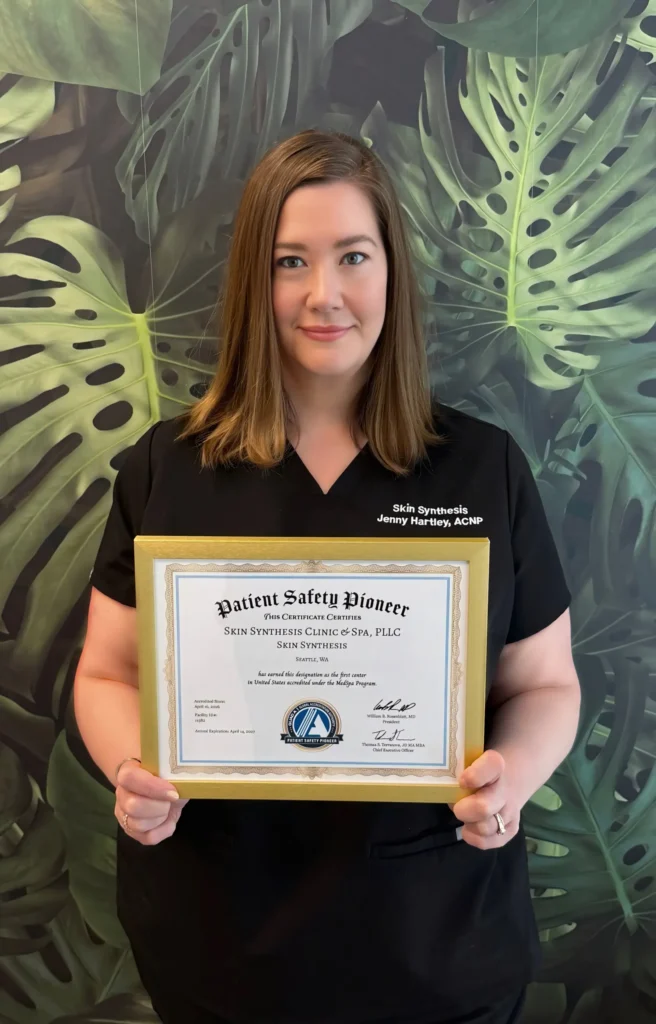
"This wasn’t about being first. It was about raising the bar,” said founder Jennifer Hartley, a nationally recognized speaker and educator in aesthetic medicine. “Patients assume there are systems in place to protect them. In reality, that’s not always the case. Accreditation brings structure, accountability, and transparency to an industry that hasn’t consistently had it."
A Growing Industry Without Standardization
Over the past decade, the U.S. medspa industry has expanded rapidly with over $1Billion in annual growth. This is driven by increasing demand for non-surgical cosmetic treatments and preventative aesthetic care. Yet unlike other areas of healthcare, many medspas operate without standardized requirements in several critical areas, including (but not limited to):
- Clinical training and competency validation – In most territories, there is no requirement that a provider be formally trained in a non-surgical aesthetic treatment prior to performing it.
- Emergency preparedness and response protocols – Few clinics have emergency response protocols in place, and even fewer have staff trained in emergency preparedness and management.
- Sterilization and infection control standards – Some medspas lack proper sterilization and infection control mechanisms such as EPA-registered disinfectants, proper PPE, sharps containers, etc.
- Documentation and patient safety systems – Documentation requirements are often lacking or missing entirely, with minimal charting and no review process.
Because of this variability the patient experience, and level of safety, can differ widely between clinics, even when offering similar treatments.
“Two clinics may offer the same injectable treatment at very different price points,” Hartley explained. “What patients can’t see is the difference in infrastructure supporting that care. And that’s often the most important part.”
What Does Accreditation Actually Mean?
Accreditation through Quad A requires a comprehensive evaluation of a practice’s clinical and operational systems. This includes:
- Formalized clinical policies and procedures
- Staff training, credentialing, and competency standards
- Facility safety and infection control measures
- Emergency preparedness and quality assurance systems
Importantly, accreditation is not a one-time achievement. It requires ongoing compliance and continuous evaluation, ensuring that standards are maintained over time, not simply met once. For patients, this creates a clearer and more reliable signal of what’s happening behind the scenes in a medical aesthetics practice by establishing a rigorous standard that the practice must comply with. While accreditation isn’t currently required for medspas, that doesn’t mean that it won’t become required someday. Initiatives like this may signal a broader evolution toward increased accountability as the industry continues to mature.
“This is where aesthetic medicine is going,” Hartley said. “More structure, more oversight, and higher expectations across the board. Patients are becoming more educated; and they should be. Patients deserve to know what standards their clinic is operating under. Accreditation is one way to make that visible.”
What Patients Should Be Asking
As the industry grows, experts encourage patients to look beyond marketing, pricing, and social media when selecting a clinic/provider. Key questions to consider are:
- What training and credentials does the clinic require / the service provider have?
- Where does the clinic source its medications from?
- Is the clinic’s medical director trained in, and practicing in, aesthetics?
- What safety protocols and procedures are in place within the clinic?
- How does the practice handle complications or emergencies?
FAQ
Q: Why does accreditation matter right now in the medical aesthetics industry?
A: The industry’s rapid growth has lacked a clear, consistent definition of what safe and compliant care truly means. Accreditation represents a turning point by establishing a higher standard and shaping the future of medical aesthetics.
Q: What shocked you most when entering aesthetics?
A: What shocked me most was the lack of standardization. In hospital settings, patient care is rooted in data, policies & procedures, and accountability. In aesthetics, I found those frameworks were largely missing. That highlighted a significant opportunity for elevation within the specialty field.
Q: What did it take to get accredited?
A: This wasn’t just a box to check. It required designing and implementing infrastructure across the entire practice: rigorous training, standardized protocols, thorough documentation, and a culture of accountability.
Q: What does this mean for patients?
A: It gives patients a trusted way to recognize clinics that adhere to rigorous safety standards, proper oversight, and accountable care.
Q: Why did you pursue this so early?
A: Because safety is non-negotiable. When a standard is available, leadership means adopting it early, not waiting until it becomes required.
Q: What should I do if the clinic I go to isn’t accredited?
A: The Quad A accreditation program for medspas just launched in 2026 so it will take time for clinics around the globe to achieve accreditation. As a patient, you can ask your clinic/provider about their education, licensure, training, policies & procedures, and how their medications are obtained.
About Skin Synthesis
Founded in 2019 by its CEO and medical director, Jennifer Hartley, Skin Synthesis is a luxury, boutique medspa in the Roosevelt neighborhood of Seattle, Washington. Jennifer’s mission from day one was to build a clinic focused on safety, compliance, patient outcomes, and inclusivity while also elevating the aesthetics specialty field as a whole. Beyond the amazing patient experience, Skin Synthesis hosts regular journal clubs, is one of only a few clinics in the United States with a comprehensive vascular occlusion simulation training curriculum, and sells policies and procedures to help other clinics strengthen their compliance and safety. Jennifer serves as a national conference speaker, a trainer for other injectors, and an advisory member on multiple advisory boards.
Share this story